

Monroe County
Room to spread out, a short drive from Bloomington.
Acreage, country homes, and small communities all around town. Here’s what to check before you buy land or a home outside the city.
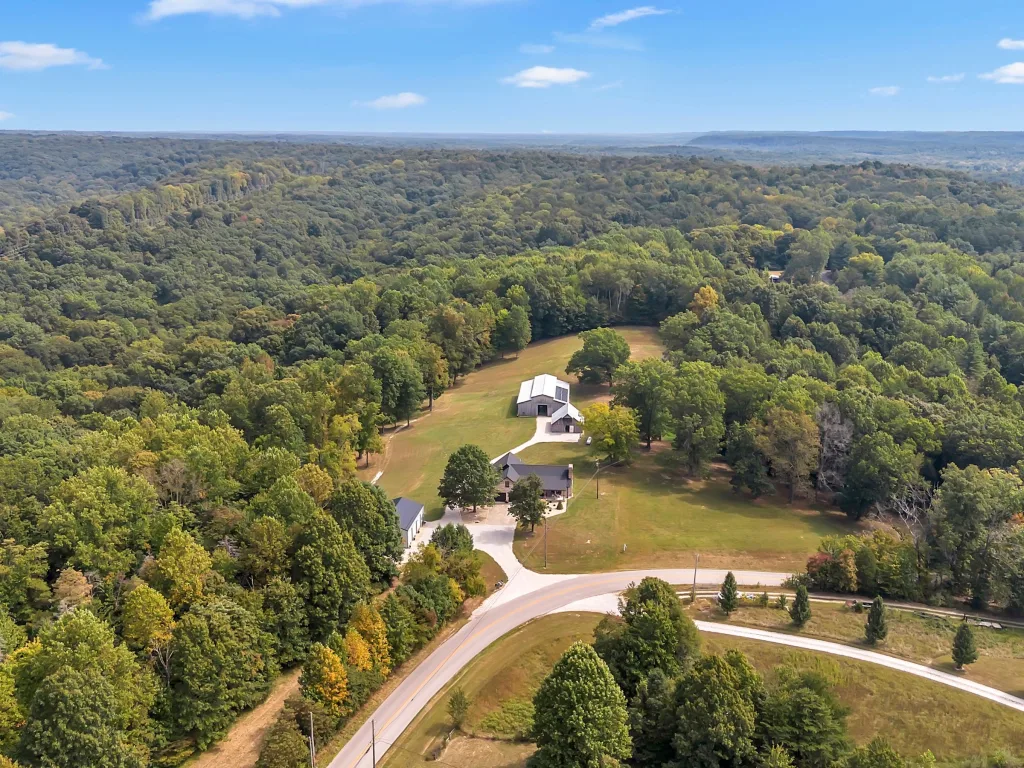
Bloomington turns rural quickly. A few minutes past the edge of town, you’re among wooded hills, farm fields, and small communities. If you’re looking at homes with acreage in Monroe County, you’ll find everything from country houses on a few acres to larger tracts of land.
Buying out in the county comes with questions a house in town doesn’t. Most rural homes have a septic system and a private well. Roads, zoning, and internet can all be different. Here’s what I look at with buyers, and where to find the official answers.
Septic systems
Outside sewer service areas, homes rely on on-site septic systems. Septic permits and inspections in the county go through the Monroe County Health Department’s wastewater team.
Inspection before you buy
The Health Department offers a Real Estate Septic Inspection on request, for a fee. According to the County, staff search the property’s septic records, then inspect in the field: they try to locate and open the tank, check the pump if there is one, and look for signs of failure in the absorption field. You get a written report with findings and any recommended repairs.
One thing to know: the County says that if an inspection finds a failing system, an enforcement case is opened, and if the property changes hands, the new owner takes on that responsibility. Talk with me about timing and how to handle the results in your offer.
Septic size and bedrooms
The County sizes septic systems by bedroom count. Its definition of a bedroom is broader than you might think, and can include a room used as an office or den. If a home has more bedrooms than its septic permit, ask about it before you make an offer. The Health Department can provide a diagram of a property’s septic field.
Building on land
If you’re buying land to build, most new septic permits require a soil evaluation by a registered soil scientist, and the soil affects what kind of system you can install. Ask about soils before you commit to a lot.
Private wells and water testing
Private wells aren’t regulated the way city water is. The Indiana Department of Health says private well owners are responsible for their own water quality, and recommends testing at least once a year.
- Test before you buy. The Monroe County Health Department notes that bacteria testing on private well water is done by the City of Bloomington’s lab at the Dillman Road Wastewater Treatment Plant. Ask your inspector or the Health Department what else to test for.
- Look up the well record. The Indiana Department of Natural Resources keeps an online database of water well records, searchable by location. A record can show the well’s depth and when it was drilled.
- Ask about the equipment. Find out the age of the pump, the pressure tank, and any water treatment system.
The land itself
Much of western and southwestern Monroe County sits on limestone karst, according to the County’s comprehensive plan. Karst landscapes can have sinkholes, caves, and underground drainage. That can affect where you can build, where a septic field can go, and how water moves across the property.
- Walk the land, and look for depressions, wet areas, and erosion.
- Ask for a survey so you know the real boundaries.
- Check FEMA’s flood maps for the property, and get an insurance quote early.
- Ask about any past quarrying, logging, or fill on the land.
Private roads and easements
Not every country road is a county road. Before you buy, find out:
- Who maintains the road? If it’s private, who plows it, fixes it, and pays for it? Is there a written road maintenance agreement?
- How do you legally get to the property? If access crosses someone else’s land, there should be a recorded easement. A driveway that’s been used for years isn’t the same as a recorded right to use it.
- What easements cross the property? Utility lines, shared driveways, and drainage can all run through a property. Your title company can tell you what’s recorded.
- Winter access. Steep or long drives can be hard to manage in snow and ice. Ask how the current owners handle it.
Zoning and land use
If you plan to build, add on, divide the land, keep animals, or run a business from home, check zoning first. Inside Bloomington’s planning jurisdiction, the City handles zoning. In much of the rest of the county, the Monroe County Planning Department does. The County’s planners take appointments to answer questions about proposed construction, subdividing property, and zoning.
Since January 1, 2026, the County’s planning review for new homes, additions, garages, decks, pools, sheds, and similar projects must be finished before you apply for a building permit at the Monroe County Building Department. The County suggests starting with its free pre-design request, which tells you which permits you’ll need.
Utilities and internet
- Electric. Duke Energy serves much of Monroe County, and South Central Indiana REMC, a rural electric cooperative, serves other parts. The Indiana Utility Regulatory Commission’s service territory map shows which utility serves an address.
- Heat. Natural gas isn’t available everywhere in the county. Ask what fuel the home uses and what it costs to run.
- Water and sewer. Expect a well and septic system unless the listing says otherwise. Confirm any public water or sewer connection with the provider.
- Internet. Confirm actual internet options at the address with the providers. The FCC’s National Broadband Map is a starting point, but don’t rely on a coverage map alone.
- Trash. City trash pickup doesn’t extend into the county. Rural residents use a private hauler or the Waste Reduction District’s recycling centers.
Inspections for homes with acreage in Monroe County
A rural purchase usually needs more than one inspection. These are the ones I talk through with buyers.
Home inspection
The house, roof, and systems, just like a home in town.
Septic inspection
Through the Monroe County Health Department’s real estate program, or a qualified private inspector.
Well and water test
Water quality, plus the well’s flow and equipment.
Survey
Boundaries, easements, and access, especially on larger tracts.
Anything the land calls for
Outbuildings, ponds, fencing, or signs of sinkholes or drainage problems. [Tarah: add any specialty inspections you often recommend.]
Around the county
Small communities outside Bloomington
A few of the smaller places you’ll come across when you look beyond town. Directions are from Bloomington.
Harrodsburg
Harrodsburg is a small unincorporated community south of Bloomington, along Harrodsburg Road near Old State Road 37. Monroe County has a rural community land use plan for the Harrodsburg area. You’ll find village homes in and around the community, with rural property beyond. [Tarah: drive time and anything you’d add from your own experience.]
Smithville
Smithville is a small unincorporated community south of Bloomington, near Sanders, along Smithville Road and Strain Ridge Road. The County’s Smithville-Sanders rural community plan covers the area. [Tarah: drive time, types of homes, and anything you’d add from your own experience.]
Stinesville
Stinesville is a small incorporated town in northwestern Monroe County, northwest of Bloomington beyond Ellettsville. It has its own town government. Monroe County also has a rural community land use plan for the Stinesville area. [Tarah: drive time, types of homes, and anything you’d add from your own experience.]
Stanford
Stanford is a small unincorporated community southwest of Bloomington. [Tarah: drive time, setting, types of homes, and anything you’d add from your own experience.]
Near the lakes
Northeast of town, Unionville and the Lake Lemon area mix village homes, rural property, and lake homes. See my pages on Unionville and Lake Lemon real estate, and the questions in buying a lake home.
Common questions about rural property
Does the County inspect septic systems before a sale?
The Monroe County Health Department offers a real estate septic inspection on request, for a fee. See the County’s Real Estate Inspection Program page for how to apply.
How do I get well water tested?
The Monroe County Health Department’s water testing page explains where to take samples for bacteria testing. The Indiana Department of Health recommends testing private wells at least once a year.
Can I build a second home or divide my land?
It depends on zoning. Start with the planning office for the property’s jurisdiction, usually the Monroe County Planning Department outside the City’s jurisdiction, before you buy.
Looking for land or a home in the country?
Tell me what you’re hoping for, and I’ll help you sort out the septic, well, road, and zoning questions before you make an offer.
Official sources
- Monroe County Health Department: Septic (wastewater)
Septic permits, soil evaluations, and contacts. - Monroe County Health Department: Real Estate Inspection Program
Septic inspections before a sale. - Monroe County Health Department: Septic system maintenance
Sizing by bedroom count and the County’s definition of a bedroom. - Monroe County Health Department: Water testing
Where to have private well water tested. - Indiana Department of Health: Well water quality and testing
Testing recommendations for private wells. - Indiana DNR: Water well record database
Public records of drilled wells. - Monroe County Planning Department
Zoning, subdivision, and the pre-design request. - Monroe County Comprehensive Plan
Land use policy, geology, and the rural community plans. - Monroe County Building Department
Building permits and inspections. - Indiana Utility Regulatory Commission: Electric service territory map
Which electric utility serves an address. - FCC National Broadband Map
Reported internet providers by address. - FEMA Flood Map Service Center
Official flood maps by address. - Waste Reduction District of Monroe County: Board page
Rural recycling centers and trash options. - Town of Stinesville
Town government and contacts. - USGS Geographic Names Information System
Official place names and locations.